Review: My Class Teacher Valentine Design for Embroidery
As a designer who spends more time staring at stitch simulations than I care to admit, I have learned that not every cute graphic translates well to thread. We have all been there: you find a charming digital asset, imagine it perfectly centered on a onesie or a tote bag, and then reality hits during the hooping process. That is why I took a close, practical look at My Class Teacher, Valentine Gifts Design. This isn’t just about whether it looks good on a screen; it is about how it performs when the needle starts moving.
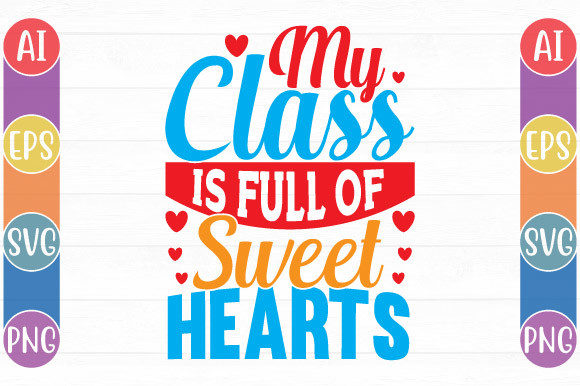
The first impression of this design is warm and inviting. It captures that specific, sweet sentiment of early education environments where every child is cherished. The phrase "My Class Is Full Of Sweethearts" carries a gentle, affectionate mood that resonates deeply with preschool and kindergarten teachers. From a layout perspective, the typography appears balanced, likely designed to be legible even at smaller scales. For those of us in the Crafts and Graphics space, we know that readability is king, especially when dealing with themed holidays like Valentine’s Day where clutter can easily overwhelm the message.
Real-World Application: The Teacher Appreciation Tote
To truly evaluate My Class Teacher, Valentine Gifts Design, I imagined a real-life scenario. Picture a local elementary school teacher who needs a functional yet festive gift for her classroom volunteers or perhaps a personalized item for herself to wear during February. I visualized stitching this onto a natural canvas tote bag. Canvas is a forgiving fabric, but it has a distinct texture. A design like this needs enough weight in its lines to stand out against the weave of the cotton.
If this were a pure applique design, it would require precise cutting and placement, which might be too fiddly for a quick production run. However, if it relies on standard satin stitch borders and fill stitch interiors, it becomes much more viable for small business owners. The inclusion of vector files like AI and EPS suggests that the original artwork is scalable and clean, which is a promising sign for digitizers who might need to tweak the size before converting it into a machine-readable embroidery file.
Performance on Different Garments and Surfaces
Versatility is crucial for any digital embroidery file intended for commercial use. Let’s break down how this design might behave across various products:
- Sweatshirts and Hoodies: This is arguably the best home for this design. The thick fabric of a crewneck sweatshirt provides a stable base for the stitches. The stitch density needs to be moderate; too dense, and the garment will pucker; too light, and the backing stabilizer might show through. Given the likely playful font, this would look excellent as sweatshirt embroidery for a teacher’s lounge uniform.
- Caps and Hats: Here, caution is required. Curved surfaces distort designs. If the text is long, it might wrap awkwardly around the front panel of a cap. I would recommend testing a smaller version or ensuring the digitizing accounts for the curve. A running stitch outline might help anchor the design without adding excessive bulk.
- Baby Clothes and Onesies: For baby embroidery, comfort is paramount. You must ensure there are no scratchy backings or overly dense fills that could irritate sensitive skin. Using a soft cut-away stabilizer and keeping the thread count reasonable is essential. This design’s theme fits perfectly for a Valentine’s Day photo prop or a gift from a favorite teacher.
- Towels and Aprons: Terry cloth is tricky because loops can get caught in the needle. If you are using this for a kitchen towel or an apron, a water-soluble topping is non-negotiable to keep the stitches sitting on top of the fabric texture rather than sinking in.
Technical Considerations for the Stitcher
Before you load this into your machine, there are several technical factors to consider. The product description mentions included PNG and SVG files, which are great for printable mockup creation or sublimation, but for embroidery, you need to verify the actual stitch file formats (such as PES, DST, or JEF) compatible with your specific machine. Since the package includes Illustrator and EPS files, it implies you may need to digitize it yourself or hire a digitizer if a native embroidery file is not explicitly listed in the zip contents. Always confirm this before purchase.
Thread Color Contrast is another critical element. Valentine’s themes often lean heavily on reds and pinks. If you are stitching on a dark navy or black shirt, standard red threads might not pop enough. You might need to add a white underlay or choose a brighter, neon-infused pink to ensure the "Sweethearts" message is readable from a distance. Conversely, on white fabric, avoid using light pastels without a proper underlay, or the design will look washed out.
Regarding hoop size, check the dimensions of the design against your available hoops. If the design is wide, you might need a 5x7 or 6x10 hoop. Trying to squeeze a large design into a 4x4 hoop by resizing it significantly can distort the lettering, making the text look stretched or compressed. Always maintain the aspect ratio unless you are prepared to re-digitize the text entirely.
Commercial Viability and Brand Consistency
For Etsy sellers and craft business owners, this design offers a clear niche. Teacher appreciation is a year-round market, with spikes in May and December/February. Using My Class Teacher, Valentine Gifts Design allows you to create targeted small shop product listings that speak directly to this audience. It feels personal and thoughtful, which increases the perceived value of the handmade product.
However, professionalism matters. A sloppy stitch-out can damage your brand reputation. Before listing finished items, stitch out a test sample on the exact fabric you plan to sell. Check for thread breaks, jumps, and alignment. If the design includes tiny details or serifs on the letters, ensure they are large enough to stitch cleanly. Tiny details often turn into blobs of thread if the resolution isn't high enough or if the needle size is too large for the thread weight.
Final Verdict and Practical Tips
In my assessment, My Class Teacher, Valentine Gifts Design is a strong candidate for seasonal collections, provided you handle the technical execution with care. It bridges the gap between sentimental gifting and professional apparel decoration. Here are my final recommendations for anyone planning to use this asset:
- Test on Scrap First: Never stitch directly on your final garment. Use a similar scrap piece of fabric to check tension and density.
- Check Licensing: Ensure the license allows for commercial use of finished physical goods. Most designers allow this, but restrictions on reselling the digital file itself are standard.
- Stabilizer Selection: Use a medium-weight cut-away stabilizer for knits (like t-shirts) and a tear-away for wovens (like tote bags) to prevent distortion.
- Mockup Variety: Use the included PNGs to create diverse design assets for your online store. Show the design on mugs, posters, and shirts to help customers visualize the end result.
Ultimately, this design succeeds because it taps into an emotional connection. When a teacher wears a shirt or carries a bag with this message, it validates their hard work. For the maker, it provides a reliable, attractive graphic that, when stitched with precision, results in a high-quality finished product that customers are proud to give and receive. Just remember: the file is only half the battle; your skill in hooping, stabilizing, and thread selection completes the picture.