Reviewing 100 Sweet Days of School for Real Projects
As a designer who spends more time at the hoop than away from it, I approach every new digital embroidery file with a mix of curiosity and skepticism. We have all downloaded a cute graphic only to realize it falls apart the moment the needle hits the fabric. That is why I took a close look at the 100 Sweet Days of School design before committing it to any client work or personal handmade product. This isn't just about whether the image looks good on a screen; it is about how it translates into thread, how it holds up on a sweatshirt or tote bag, and whether it delivers the professional finish our customers expect.
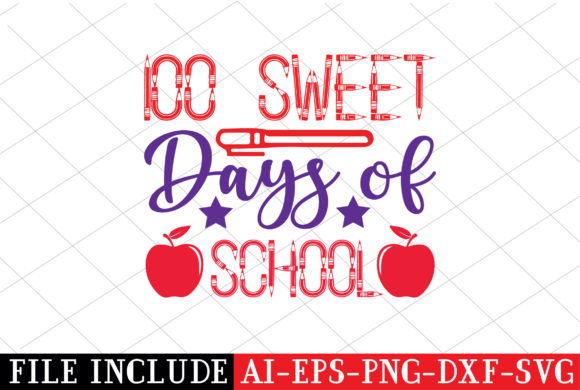
My first impression of 100 Sweet Days of School was that it carries a playful, celebratory mood perfectly suited for the mid-year milestone in elementary education. The layout feels balanced, avoiding the clutter that often plagues text-heavy school designs. Visually, it has a personality that says "fun" without being childish, which is a hard line to walk. For an embroidery project targeting parents, teachers, or boutique owners, this aesthetic is gold. It suggests a personalized gift that feels thoughtful rather than last-minute. However, as a reviewer, I need to dig deeper into how this Graphics asset performs when converted into a stitched reality.
Real-World Application: The First Day Rush
To truly test the viability of this design, I imagined a realistic scenario: a small shop owner preparing a batch of custom apparel for a local school's "100th Day" celebration. Imagine you are stitching a run of twenty custom apparel items, ranging from toddler tees to teacher aprons. The 100 Sweet Days of School design needs to work across these varied canvases. Because the source files include SVG and DXF formats, the flexibility is there for Cricut Explore, Silhouette, and vector editing in Adobe Suite or Inkscape. This is crucial for us because we often need to resize or tweak elements before sending them to the embroidery machine.
In this hypothetical production run, the design shines on medium-weight fabrics like cotton twill or fleece. If I were creating a baby embroidery piece for a onesie, I would be cautious about the density. School-themed designs often pack in a lot of detail to represent the number 100, and if the stitch density is too high, it can make the fabric stiff and uncomfortable for a six-year-old. On a sturdier tote bag design or a canvas backpack, however, that same density adds a premium feel. The visual weight of the design anchors well on larger surfaces, making it an excellent choice for small shop product lines that need to stand out on a crowded craft fair table.
Navigating Fabric Challenges and Hoop Constraints
While the artistic merit of 100 Sweet Days of School is clear, practical execution requires attention to detail. One major consideration is the hoop size. Depending on how the design is scaled, it might push the limits of a standard 4x4 hoop. If you are working with curved surfaces like caps or visors, you must ensure the design fits within the cap frame without distorting the lettering or graphical elements. Text-heavy designs can suffer on curved surfaces if the underlay isn't perfect, so a test stitch is non-negotiable.
Fabric texture also plays a massive role. On a fluffy towel or a textured knit, fine details can get lost. If your version of this design relies on tiny running stitch outlines or intricate satin stitch borders, they might sink into a high-pile fabric. In those cases, I recommend using a heavier cut-away stabilizer to keep the stitches floating on top of the material. Conversely, on thin, stretchy fabrics, you risk puckering if the thread colors are too dense. A smart move is to check the design in a black-and-white mockup first to see where the heavy fill areas lie. This helps you anticipate where the fabric might pull.
Dark fabrics present another challenge. If the 100 Sweet Days of School design includes light-colored elements, you may need to adjust the underlay or add a white base layer to prevent the garment color from showing through. This is especially true for holiday embroidery or seasonal items where contrast is key to readability. Always verify the thread colors suggested in the file against your actual inventory; sometimes a digital shade looks vibrant but stitches out duller than expected.
Commercial Value and Brand Consistency
For Etsy sellers and creative entrepreneurs, the value of a design lies not just in its look, but in its reliability. Using 100 Sweet Days of School in your craft business can enhance buyer engagement if the finished product looks crisp and professional. Customers trust handmade items that show attention to detail. If the stitching is clean and the design holds its shape after washing, you build a reputation for quality. This design fits well into niches like nursery decor, wedding gifts for teacher couples, or even printable mockup assets for digital product sellers who want to showcase realistic examples.
However, before listing items for sale, you must confirm the licensing terms. The product description notes compatibility with various software suites, but it does not explicitly state the commercial license scope for the embroidery conversion. As a rule of thumb, always check if the design assets allow for unlimited physical sales or if there are restrictions on the number of finished items. This protects your small business from potential legal issues down the road. If you plan to sell the digitized file itself, that is a completely different ballgame and usually requires an extended license.
Final Verdict and Designer Notes
After evaluating the potential of 100 Sweet Days of School, my conclusion is that it is a strong contender for spring and early fall collections. Its versatility allows it to move from a simple embroidered patch to a full-back sweatshirt embroidery with minimal fuss. To get the best results, I advise running a test stitch on scrap fabric that matches your final garment. Pay close attention to the corners and any small text elements; these are often the first places where registration issues appear.
Remember to inspect the applique design elements if your version includes them, ensuring the tack-down and cover stitches are sufficient to prevent fraying. Whether you are using a fill stitch for solid areas or decorative accents, the goal is a clean backside and a smooth front. With the right stabilizer, proper hooping, and a keen eye for fabric compatibility, 100 Sweet Days of School can be a profitable and delightful addition to your catalog. It bridges the gap between a fun school activity and a keepsake personalized product that families will cherish long after the 100th day has passed.